Levon Brooks: Innocent All Along

In 1990, a small Mississippi town was shattered by an unthinkable crime: the abduction and murder of a three-year-old girl. Fear and panic spread quickly in this small community, and so did the need for answers.
Police landed on Levon Brooks. Not because of physical evidence. Not because of DNA. It was because he was once romantically involved with the child’s mother, in which one of her daughters identified him as the suspect from seeing him around. That was enough. Or was it? In 1992, Levon Brooks was convicted and sentenced to life in prison. After the sentencing, when the judge asked if he had anything to say, Levon stood and spoke just one sentence:
“I know y’all convicted me for capital murder, but I didn’t do it.”

He never said anything more.
The case against him rested almost entirely on bite-mark evidence, a forensic method now widely discredited. There was no confession. No DNA. No physical proof placing Levon at the scene. In fact, he had an alibi, he was at work during the time frame that the crime occurred.
Still, the jury believed the “expert” and a vulnerable eyewitness statement of a child. And just like that, Levon lost everything. For 16 years, he sat in prison as life moved on without him. This is what happens when the system locks onto a suspect and refuses to look away. It’s called tunnel vision. What finally broke the case wasn’t a witness coming forward or a confession… it was DNA.
In a strikingly similar case in the same town a few years later, another man had been convicted using the same faulty bite-mark evidence. When DNA testing was finally allowed, it didn’t just clear one man, it led to the real suspect, who confessed to both crimes, one of which was the crime Levon was accused of.
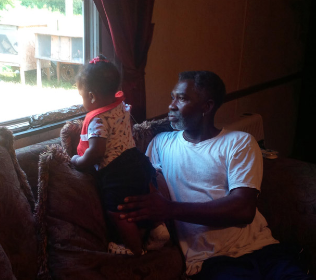
In 2008, Levon was exonerated.
Freedom didn’t give him back the years he lost, but it gave him something else: time. Time to be with family. Time to live quietly, and with dignity.
Levon passed away in 2018 from cancer, and only 10 years after being exonerated. He was 58 years old.
His story still matters.
It matters because it shows how wrongful convictions happen not to “other people,” but to real people:
When pressure to solve a crime outweighs the search for truth.
When access to DNA testing is delayed or denied.
When bias shapes who is suspected and believed.
According to the Innocence Project, faulty forensic evidence plays a role in countless wrongful convictions. Levon Brooks paid that price. He was innocent, and the system failed him.
This ongoing series will focus on other wrongfully convicted peoples’ stories, their humanity, and their urgent need for awareness and advocacy. You can learn more about wrongful convictions and Levon Brooks’ story by watching Netflix’s docuseries: Innocence Files.